“To love God in the most practical way is to love our fellow beings. If we feel for others in the same way as we feel for our own dear ones, we love God” Meher Baba (1977). “The Mastery of Consciousness: An Introduction and Guide to Practical Mysticism and Methods of Spiritual Development.”
INNER LINKS to thyne own self be true. My recovery began when I crossed the threshold of a 12 step meeting, into a small group of recovering addicts welcomed me home with love, connection and community. The journey of lifetime for me had began on a warm NYC Autumnal day: early in the morning of 12th October, 1988.
A moment of divinely inspired clarity: a state of desperation, the admissions office at Payne Whitney Hospital saved my life. I was at-risk of overdosing, incapable of coping with suicidal thoughts caused by chronic addiction. Beyond helpless and hopeless.
A family intervention arranged by my former partner, my best friend and my mother. A deep bow to my darling Scottish mother. She encouraged me to dream, and self reflect throughout the day, pondering upon the beauty, recognition and love for humanity.
The angst of separation revealed a crack in my armour, moment of humility, just enough for me to ask for help. A childhood survivor of active mental health and addiction problems I grew up listening to my parents to suggestions to help others, be of service. and understood the truism: before I could even contemplate helping others who were in need of connection, comfort and compassion I had to help myself.
Echoes of my mother’s compassionate, salient thoughts soothed my troubled soul. Love, she believed was our the highest calling. She was well known in our community as a kind, compassionate person. A friend too many, always ready to help.
We share a deep love of humanity, always wanting to see the best in others. I continue to find comfort in her wisdom, particularly in relationships, and friendships. Her natural generosity of spirit taught me as a child, the antidote to suffering is in helping others, doing service, within one’s community.
Developed in the early 20th century to address addiction, the Twelve Step programme was later found to be an effective tool in aiding recovery for all types of obsessive, compulsive behaviours.
HEALING THE SOUL The history behind the Twelve Steps, from the program’s origins in Depression-era America to building a foundation for recovery that incorporates concepts identified by psychologist C. G. Jung offers relevant insight into the meaning of addiction is timely, accessible, and constructive. At a time of radical change and opportunity, the transformative power of these universal principles and thoughtfully explores ways of aligning with them.
CONSTANT CRAVINGS The progression of addiction is hell on earth. A brutally slow suicide. Abject loneliness. Many dark nights of the soul’s solitary escape from reality. The pathos, pain and suffering. Repetition compulsion. Hopelessness and helplessness.
DETACHMENT WITH LOVE: I first heard of Al-Anon at an A.A. meeting. I found the fellowship focus helpful, healing and profoundly transformational the deeper I went into the 12steps of Al-Anon, which was a similar inner process as I had experienced with my A.A. sponsor – my soul was awakening from a lifetime of discontent.
I AM A DOUBLE WINNER intertwining A.A. & Al-Anon’s steps, traditions, principles and concepts are profoundly healing. I never say never…am I not an addict. I simply state the grace of a loving God guides me every day, in every way to be the best version of myself.
In detachment lies the wisdom of uncertainty . . . in the wisdom of uncertainty lies the freedom from our past, from the known, which is a conditioned rigid mindset.
TENDERNESS soften rigidity, resistance to change, to step into the unknown, intuitive possibilities, awakens our soul from the slumber of illusion if we choose to surrender ourselves to the creative realm that orchestrates the dance of the universe.
Stress defined my life design, a constant companion. Today, if I am drifting mentally away from the present, I become stressed. Simple. Being mindful when I am being triggered is a tremendous advantage.
INNER PILGRIMAGES living with heightened vibrational presence is ever present in perfect alignment with a continuum of healing my soul practices. Many years ago, I took my unexamined life on perma-pilgrimage. Traveling to heartcentred sacred ancient sites, to bow and or sit at the feet of living spiritual teachers, modern day mystics, silent meditation teachers.
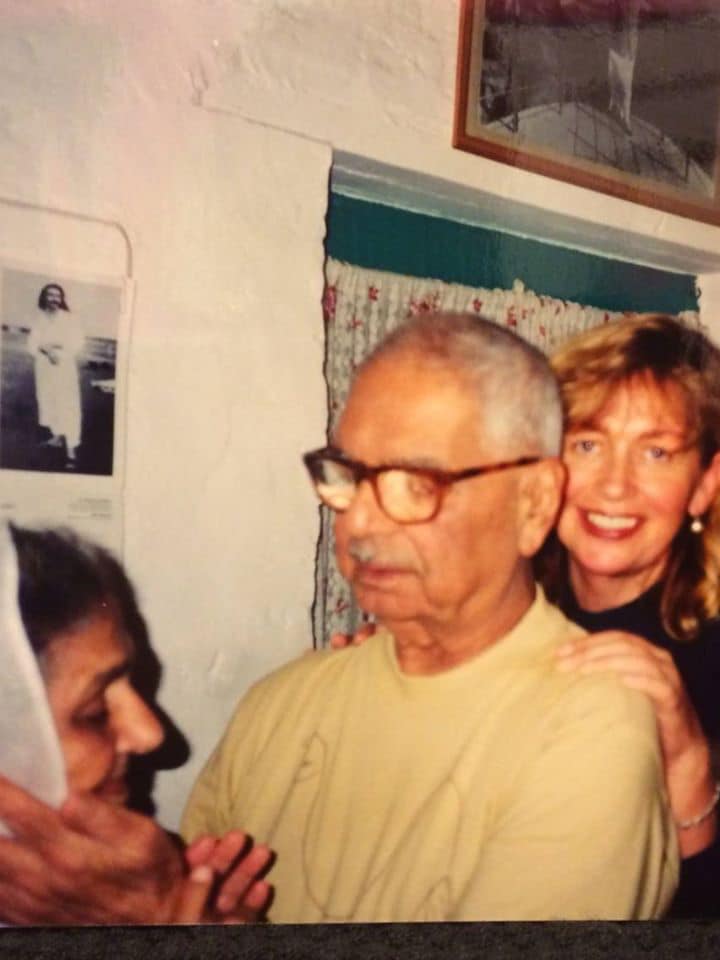
Meher Baba’s spiritual concepts—such as the primacy of divine love, the heart as a vessel for all creation, and living a life of service and inner awakening. I was as close to Meher Baba as humanly possible when I lived at Meherabad. My daily life was one of service – volunteering at the Meher Dispensary, teaching at Meher School to local impoverished by circumstance but not by spirit beautifully polite, proud Indian children whose joy and love of nature, animals, their families fields as far as the eye could see in a rural village that was as remote as it gets from my former air-brushed existence. The best of times.
Moreover, too many to recall, Dark Night of the Soul subsumed my Soul. Until I asked for help, nothing changed then everything all at once changed me, forever. “The wonderful energy it releases and the eager action by which it carries our message to the next suffering alcoholic and which finally translates the Twelve Steps into action upon all our affairs is the payoff, the magnificent reality, of Alcoholics Anonymous.”
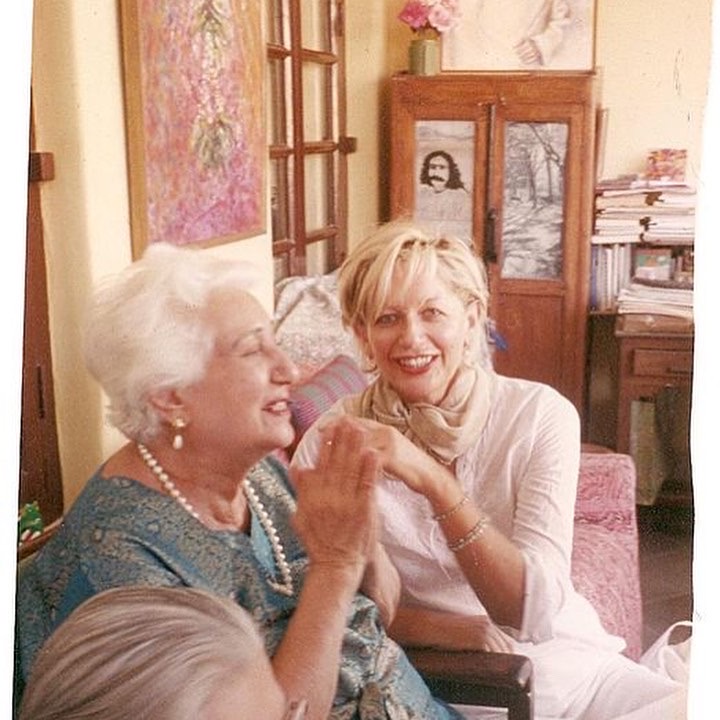
Meher Baba’s Mandali taught me who taught me the art of spiritual elegance; equipoise. Their love awakened my intuition and the perfectly imperfect balance of the head and the heart.
Become conscious of this life Divine. Be a better person. Kinder, compassionate and empathic. The map of the soul is not the territory. What is key to igniting an enriched life force is to know who you are. Layers of self-denial have been peeled away to reveal the abject beauty of being comfortable in my own skin.
The way forward is less cluttered with obstacles when I release what is no longer serving a divine purpose in my life. Feelings are energy in motion. Feelings continue to keep moving forward. Nothing is permanent in life. The illusion of something being forever creates suffering, cravings and attachment.
Whenever I have experienced feelings of hopelessness and helplessness it has been because I am holding onto something that no longer fits into my life design. A person, place or thing that does not love me back. The pathos of addiction is the attraction to pain. A self-fulfilling prophecy.
STRENGTH IN STILLNESS is simply stunning. Upon awakening. I greet the day in silence. I smile. I breathe. I time with my breath, my God of my understanding, My time with God usually in the afternoon each day I quiet time, practice of meditation. for me is in the ZAZEN – seated meditation. I was taught how to practice Zazen whilst living in Tokyo in 1979. The temple, devotional process was hindered by constant cravings for Sake and a cigarette but something came through albeit momentarily in my madness that felt like wisdom and clarity of peace of mind.
I am privileged to be part of the universal twice daily practice led by existentially elegant, TM teacher /trainer Bob Roth, who created the opportunity for twice daily TM zoom sessions when the world went into lockdown, but not spiritually – many of us awakened to a new world with a lifetime of practising ancient meditations to strengthen our daily practice despite the overwhelming fear living and dying.
Twice daily TM with Bob transformed my existential angst accompanied with a few salient words/readings from sourced philosophy, mythology or contemporary psychology to finish the session with resonant, deepening spirituality.
The breath, on a cellular level, can be a calming, transcendent energy force, a self regulating continuum for our immune system, maintaining physical and psychological homeostasis. A distinctive attribute is in our ability to know our own essence—our own intrinsic divinity.
Deep breathing exercises improve heart rate variability. Strengthen the parasympathetic nervous system (your “rest and digest” network), resulting in reduced stress and optimised vagal tone.
MEDITATIVE STILLNESS Since 1973 I have practiced different meditation orientations – prompted to change because of an inner yearning to embody wholeness at different times on my spiritual path. Oftentimes I I need silence, and other times it is lucid dreaming and or symbolism. However, pranayama is my continuity anchor in all my meditation practices.
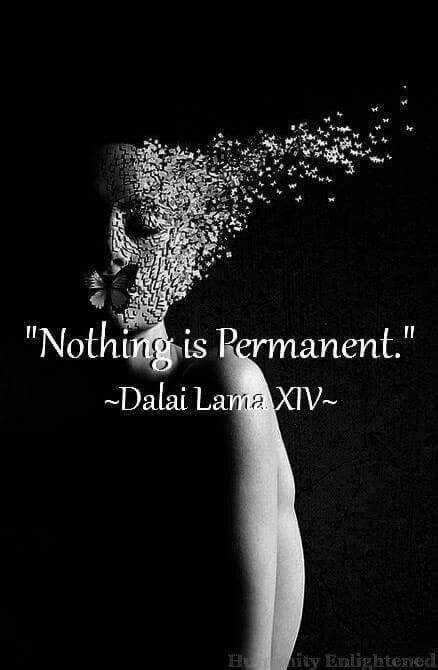
TRANSCENDENCE didn’t naturally occur in my early practice of TM meditation. When it did I immediately knew I was accessing the unbounded stillness that lies deep within. And when you experience that pure stillness within, yourself, at the source of thought, even for a moment. I remembered that moment for a lifetime.
MEDITATION has many calming purposes: reduces stress, clarity of the mind, attention, intention and integrity. But foremost among them is to experience transcendence. And not on rare, once-or-twice-in-a-lifetime occasions but whenever you want, to one degree or another, every day.
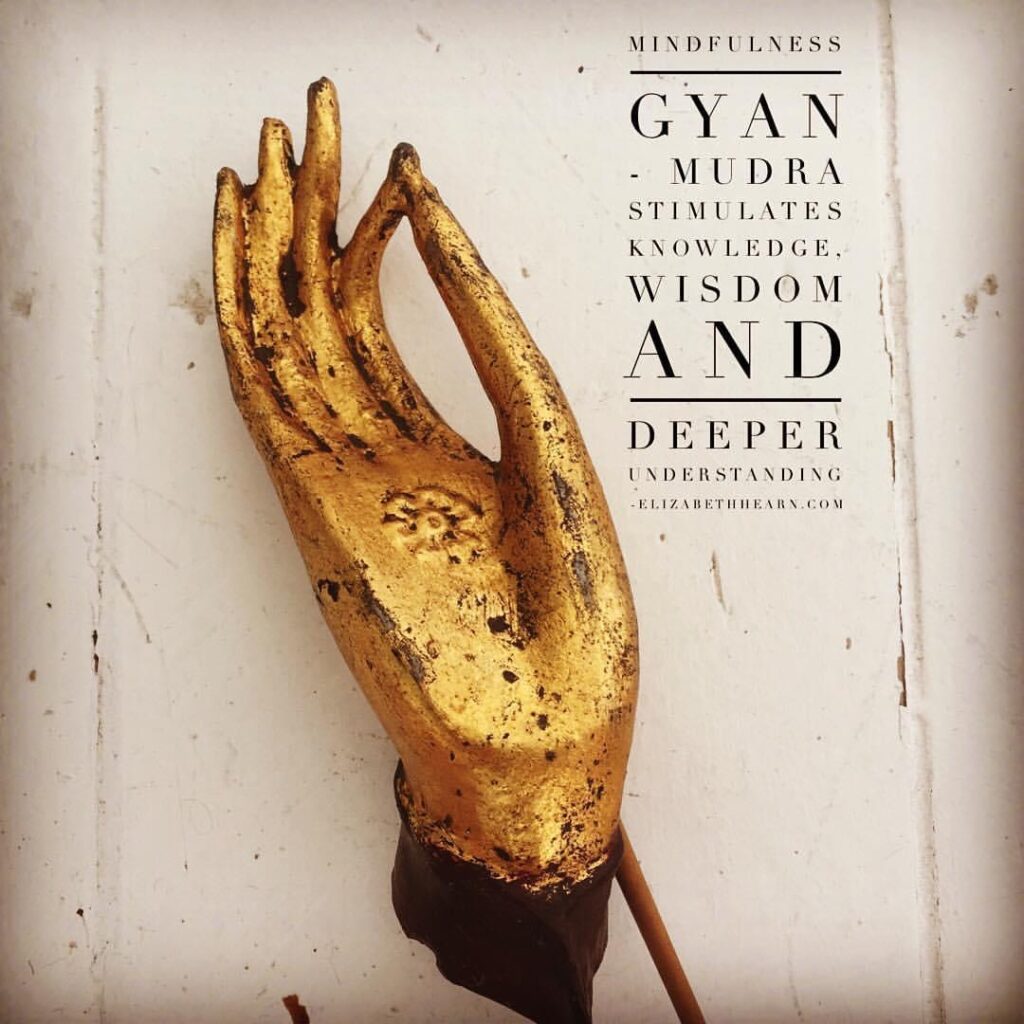
BREATH-WORK In “The Yoga Sūtra” Patañjali recommends the breath as a means for overcoming cravings, distractions, and upsets that prevent us from understanding our Essential Nature.
My soul loves slowness, calmness and gentle breathwork. This allows a portal for meditation to open whereupon we have the ability to glimpse what lies beyond the dividing mind: our underlying essential nature of unbreakable peace and wellbeing.
Patanjali describes the dynamics and power of the mind by selecting a precise term, chitta. Chitta is derived from the verb root chiti, “to comprehend, understand, realize, or experience completely (chiti kiti sanjnane).” The fact that the word for mind—chitta—is derived from chiti tells us the mind is both the means of, and the conduit for, understanding truth in its fullness. Through the mind we become aware of reality within and without.
The mind is the repository of all our thoughts, feelings, and memories. It is a storehouse of our likes and dislikes. We see the world—and ourselves—through the eye of our mind. When the mind is clear and peaceful, we see the world as bright and peaceful.
When the mind is convoluted, our understand- ing of the world and our relationship with it becomes equally convoluted. Our concepts of good and bad, right and wrong, depend on the quality of our mind, as do our likes and dislikes. The quality of our mind, in turn, shapes our thoughts, speech, and actions.
MANTRA: Chanting Om Tat Sat is believed to awaken and cultivate higher consciousness as a means of connecting with the true self. It is one of the most common mantras, often recited during Hindu religious practices, the study of the Vedas and at the end of the yajnas (sacrifices).
This mantra is also used by some yogis in India as a greeting, with Hari as a prefix. The greeting Hari Om Tat Sat is a reminder that individuals are more than the body and earthly, material life.
According to the Bhagavad Gita, all religious work or sacrifice should begin with the sound of Om. The sound of Tat reminds devotees to renounce any reward for the work or sacrifice they engage in. The sound of Sat serves as a reminder of what is good and true.
In particular, the Bhagavad Gita highlights the importance of Om Tat Sat in chapter 17 from verse 23 to 28. In this section, Lord Krishna declares that the mantra represents a threefold name for the Supreme soul, from which Brahman, the Vedas and yajnas originated
The repetitive chanting of a mantra encourages the mind to enter into a meditative state so that the practitioner may begin to connect with the higher Self or the Divine within.
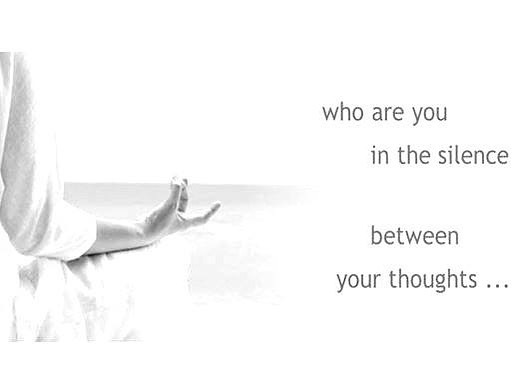
Chanting may be practiced in any stable seated posture in which the spine can remain upright, such as sukhasana (easy pose) or padmasana (lotus pose). It is important to focus on the powerful inner vibration of this mantra whilst chanting, in order to connect with the divine truth within.
TRANSCENDENTAL MEDITATION ‘How we get there’ has been the domain of meditation since times immemorial. Meditation has long been associated with ideas of inner equanimity, clarity, focus, creativity, strength
25 years go my Vipassana training began at a silent meditation retreat – 10 days of sitting – for long periods of time, in silence. I am comfortable with silent communities. Actually prefer not needing any devices. Digital distractions. When I lived at an Ashram, in remote rural India I loved the peace and quiet times of sitting in silence at Meher Baba’s samahdi. Divine times with the beloved.
Vipassana translates to “insight” or “seeing things as they really are,” is a foundational Buddhist meditation practice aimed at specific self-transformation and mental awakening.
Rather than relying on external deities or intellectual theories, this practice focuses on the direct, experiential observation of the mind-body phenomenon. By anchoring your attention to physical sensations, you begin to dissolve the deep-seated mental habits of craving and aversion that naturally cause suffering in daily life.
The mechanism of awakening through Vipassana relies heavily on developing a quality called equanimity—a state of mental balance that remains undisturbed by whatever arises. As you sit and observe the changing landscape of your body, you will inevitably encounter a spectrum of experiences ranging from intense physical pain to deep waves of pleasant relaxation.
The practice is to look at both with the exact same objective interest, neither pushing away the discomfort nor clinging to the pleasure. Through this sustained, unreactive observation, the mind naturally begins to understand the three fundamental truths of existence: that all things are impermanent, that clinging to changing things causes stress, and that there is no fixed, unchanging “self” behind the experiences.
This experiential insight is not just a philosophy; it follows a well-documented psychological progression known as the stages of insight. In the beginning, the mind becomes highly attuned to the rapid arising and passing away of thoughts and physical sensations. As concentration deepens, you may experience stages where the illusion of solidity dissolves entirely, revealing that the body and mind are merely a flux of vibratory energy.
Navigating these stages requires a balance of mindfulness, investigation, energy, and calm. Eventually, this process culminates in a state of profound peace where the mind stops fighting reality and rests in a natural, unmediated presence.
For many modern practitioners, the most accessible entry point to this tradition is through intensive 10-day silent residential courses, which were globally popularized by the late teacher S.N. Goenka and are hosted worldwide via Dhamma.org. These retreats provide a highly structured, distraction-free environment specifically designed to accelerate concentration and break through habitual mental chatter. However, the ultimate goal of the practice is to carry this unshakeable, unreactive awareness off the meditation cushion and seamlessly integrate it into the complexities of daily life, relationships, and work.
I am a great believer we can transcend how we experience the word. I have experienced too many to recall dark nights of the Soul. Abject loneliness. Self imposed solitary times of great self-reflection. It was I who abandoned God.
The spiritual path reveals a continuum of insights into the soul. Oh how we yearn to belong and experience love, acceptance, and validation Together we can. Alone feeling separate from God, from one another is a painful place to inhabit.
Illusion is being bound to depend upon a false ideal about a person, place or thing. Living the lie is a painful, isolating existence. Obsessive thinking needs certainty. Fear is an absence of courage to accept what is happening in the present moment in time, as real.
In the immediacy of daily life it is easy to lose focus and forget that you are powerful human being. Aspire to possess emotional freedom. It is a wonderful way to live. The glitches can then come and go. The truism: “This too shall pass” never fails to bring my mind into awareness to release, to let go.
I am a great believer in the potency of transcending existential cycles in my life. Dark nights of the Soul are solitary times of great self reflection.
Pain is an indicator that something is out of sync. I call this a departure from illusion, pretending to myself and others that everything is fine, pretending to be happy with circumstances and pretending to be perfect.
When we pretend to be who we are not it is an invitation to endure living the lie of existence. The consequence of living the lie? Exquisite emotional pain. The sense of loss is often overwhelming when things don’t last, or our expectations fall upon deaf ears. When we pretend we are happy in love and life, we mask feelings of inadequacy, fueled by low Self-esteem, we lie to keep our demons captive in the fertile states of a toxic imagination. Jung believed that separating a person from their fantasy could be dangerous, I concur. Easing away from the edge is healthier, slowly, but purposefully detaching.
Detaching can trigger feelings of isolation that run deep into the recess of the psyche. In Sufism, it is said the Heart remembers, and the Mind records. This why taking the time to release negative emotions is advisable. Learning how to observe ourselves, developing a mindful physic-pause button means that the neural pathways continue to pump out impulses but we don’t have to act on them. Free will. Continuing to choose to not act on your first impulsive thought and you will notice a difference in your self esteem. Self-reflection augments self-discovery. What obstructs this from occurring is an inability to believe that change is possible. Repetition compulsion is powerful. There is a false sense of security that is derived from “knowing” the outcome in a situation. Obsessive thinking wants certainty.
A hard taskmaster to possess in a world that offers no guarantees.Love is my anchoring point – a complex skillset of guiding principles to engender the process of sustaining the journey forward.
Each day is a new beginning and presents the opportunity begin doing your day differently in order to actualise your authenticity is to begin with journalling. Exercising the mind is just as important as is Zazen Meditation, pranayama, eating less, moving more. What we eat today, walk and talk tomorrow. Cutting out sugar and processed food is a hard choice to make, but one that is worth the commitment to change.
Experiences on the spiritual path continue to reveal the magnificence of maximal love, realms away from pseudo sentimentality, pivots of profound expressions of courageous applied wisdom in all dimensions of life, from close, intimate love, to companionship, social engagement and environmental action.
RECOVERY brings into alignment with the soul, ones mind and heart. It comes down to self-love: the daily commitment to thine own self be true. To learn how to keep ones own counsel .
AWARENESS of pacing and pausing throught the day. Remembering to breathe. The courage to change. Self acceptance. All is well when I bring loving kindness to my every action.
SOFTENING hardwired rigid thinking kept me stuck, subsumed in shame, afraid to live and afraid to die. I am 38 years sober – and I am not same the person who lost their way, when every day was hell on earth to a life beyond my wildest dreams.
People will love you and leave you throughout life. The only relationship you can ever guarantee to remain intact while you’re alive is the one you have with yourself. Therefore, this is the one you must nurture the most. Be committed to filling your own cup and allow yourself to overpour with love. As you rise in self-love, you will naturally offer your energy wholeheartedly in your interactions and engagements.
Even amidst adversity, such as the end of a romantic relationship, inspire change by making self-accountability a prominent aspect of your healing. Every experience contributes to your evolutionary journey. We can learn so much about ourselves through other people, even if they come bearing pain. Some individuals appear to be harsh tutors. But essentially, they can give us the direction we need to return to ourselves – to the reservoir of love within.
Pain is an indicator that something is out of sync with universal reality. When I lie to myself and others I pretend to myself and other everything is fine, content with circumstances, and perfect.
When we live the lie… to be who we are not, it invites us to endure the lie of existence. The consequence of living the lie is exquisite emotional pain. The sense of loss is often overwhelming when things don’t last. Moreover, our expectations fall upon deaf ears. When we pretend, we are happy in love and life. We mask feelings of inadequacy, fueled by low Self-esteem. We lie to keep our demons captive in a toxic imagination. Jung believed that separating a person from their fantasy could be dangerous. I concur. Easing away from the edge is healthier. By doing this, we detach slowly but purposefully.
Detaching can trigger feelings of isolation that run deep into the recess of the psyche. In Sufism, it is said the Heart remembers, and the Mind records. This is why taking the time to release negative emotions is advisable. Learning how to observe ourselves helps. Developing a mindful physic-pause button helps manage impulses, even as neural pathways continue to pump them out.
FREEDOM FROM COMPULSIVITY is pausing before reacting… choosing not to act on your first impulse. You will notice a difference in your self-esteem. Additionally, self-reflection augments self-discovery. Obstacles include an inability to believe change is possible. Repetition compulsion is powerful. A false sense of security comes from knowing the outcome. Obsessive thinking wants certainty. It is a hard taskmaster in a world with no guarantees.
Freedom from the bondage of self is my absolute safe place. Moreover, meditation’s strength in stillness invites retreat and return.Additionally, Sat Nam. Therefore, I am that. Additionally, an easier, softer way of living life.I am enough. Moreover, I do not dwell in suffering. Furthermore, I revisit pain and suffering as an authentic human being.Thus, it is your anchoring point to sustain the journey forward. Also, intuition honors your value system and what life means to you. What inspires you and ignites your spirit. Finally, what awakens abundant ‘Ah Aha’ moments when everything makes sense.
SAVERSHAM